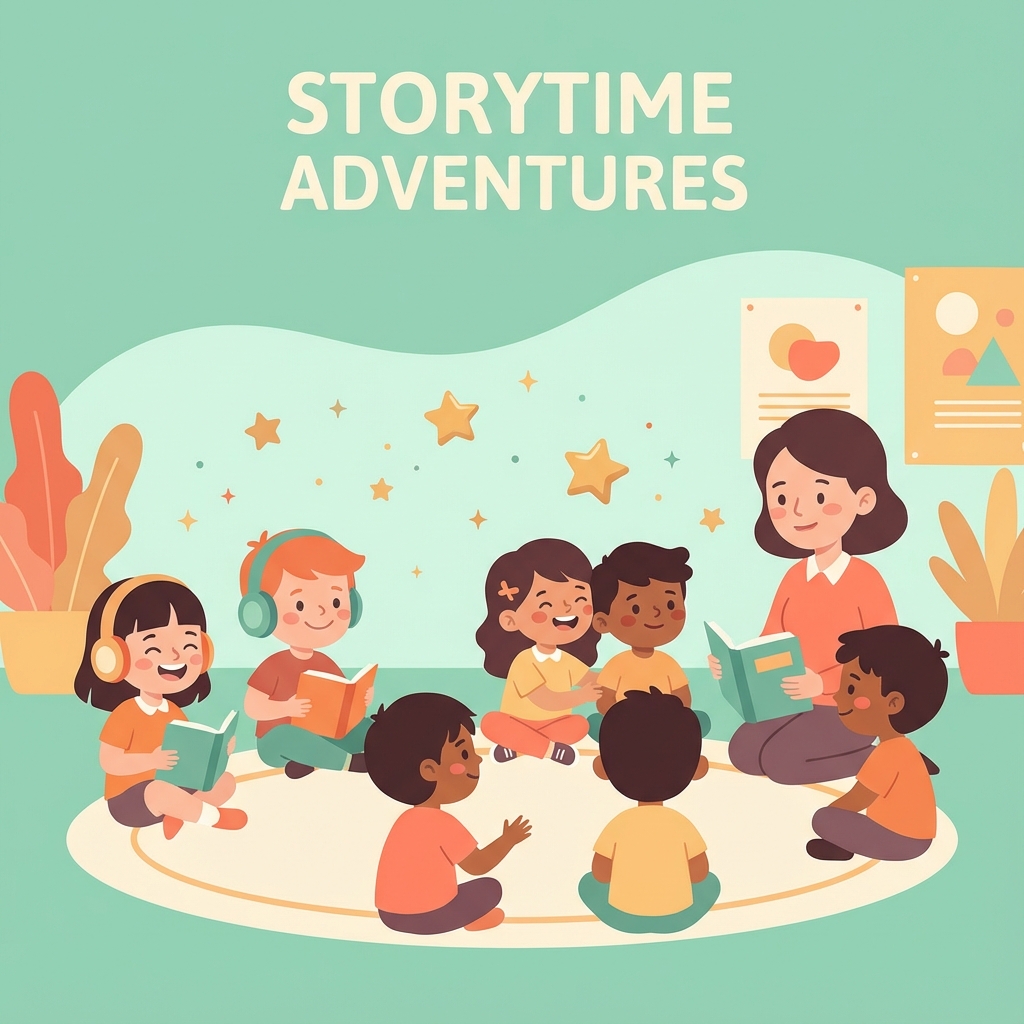
Children often learn best when curiosity, play, and connection come together. Taley should make technology a means, not the destination: personal audio stories designed to invite listening, thinking, and more questions, without performance pressure.
💡 Core Concepts
- Active instead of passive listening: Children shape the story instead of just consuming it.
- Age-aware language: For beta, we are developing vocabulary, sentence length, and choices for different developmental stages.
- Understanding feelings: Characters can create openings for conversations about emotions, friendship, and conflict.
- Deeper curiosity: Questions about dinosaurs, space, or everyday life should become new adventures and shared conversations.
The "Goldilocks Principle" of Learning
In pedagogy, we speak of the "Zone of Proximal Development" (Vygotsky). Learning happens where a task is just challenging enough to remain exciting, but not overwhelming.
Traditional audiobooks tell the same story to everyone. Taley's vision is more personal: interests, age, and deliberate choices should shape the story. We want to evaluate how well that planned adaptation works with families and institutions during beta.
📊 Tailored for Every Age
A 4-year-old experiences the world differently than a school child. Here's how Taley adapts:
👶 The Explorers (3-5 Years)
- Focus: Vocabulary expansion, sentence structure, recognizing emotions.
- Topics: Everyday situations (brushing teeth, sharing), animals, family.
- Style: Repetitive structures, simple sentences, warm voices.
🧒 The Adventurers (6-8 Years)
- Focus: Logical thinking, moral understanding, first areas of knowledge.
- Topics: Friendship, school, natural phenomena, first fantasy worlds.
- Style: More complex plot lines, dialogues with wit.
🧑 The Researchers (9-10 Years)
- Focus: Critical thinking, empathy for complex characters, non-fiction topics.
- Topics: History, science, social dynamics, mysteries.
- Style: Sophisticated language, cliffhangers, moral dilemmas.
The 4 Pillars of Our Educational Mission
These four pillars guide product development. They are learning goals and design principles, not a guarantee of a particular educational outcome.
Taley should place new words in understandable contexts and give families openings for conversation.
Alongside a world of pre-made media, Taley should be a blank canvas. The child decides: "The hero should be a blue elephant." That sense of agency can support confidence in their own ideas.
Characters should experience fear, courage, mistakes, and reconciliation in child-friendly ways. That can prompt conversations about frustration or sadness.
In interactive moments, Taley might ask: "Why do you think the dragon is sad?" Questions like this are intended to encourage perspective-taking and reasoning.
"A good Taley story should not tell a child what to think. It should make them feel: your questions and ideas are where the adventure begins."
Why Audio Comes First
Listening leaves room to form pictures in the mind. Taley is therefore being designed as an audio-first experience: screens may support choices and parental controls, but should not dominate the story.
🧠 What research suggests: An observational study of preschool children found an association between a more stimulating home reading environment and stronger activation in certain brain regions during story listening. It did not study Taley or prove a causal product effect.
/ Source: Hutton et al., "Home Reading Environment and Brain Activation in Preschool Children Listening to Stories", Pediatrics 2015, doi:10.1542/peds.2015-0359Support your child playfully.
Help us turn this learning vision into a product that genuinely fits family life.
🪄 Join the Beta Waitlist